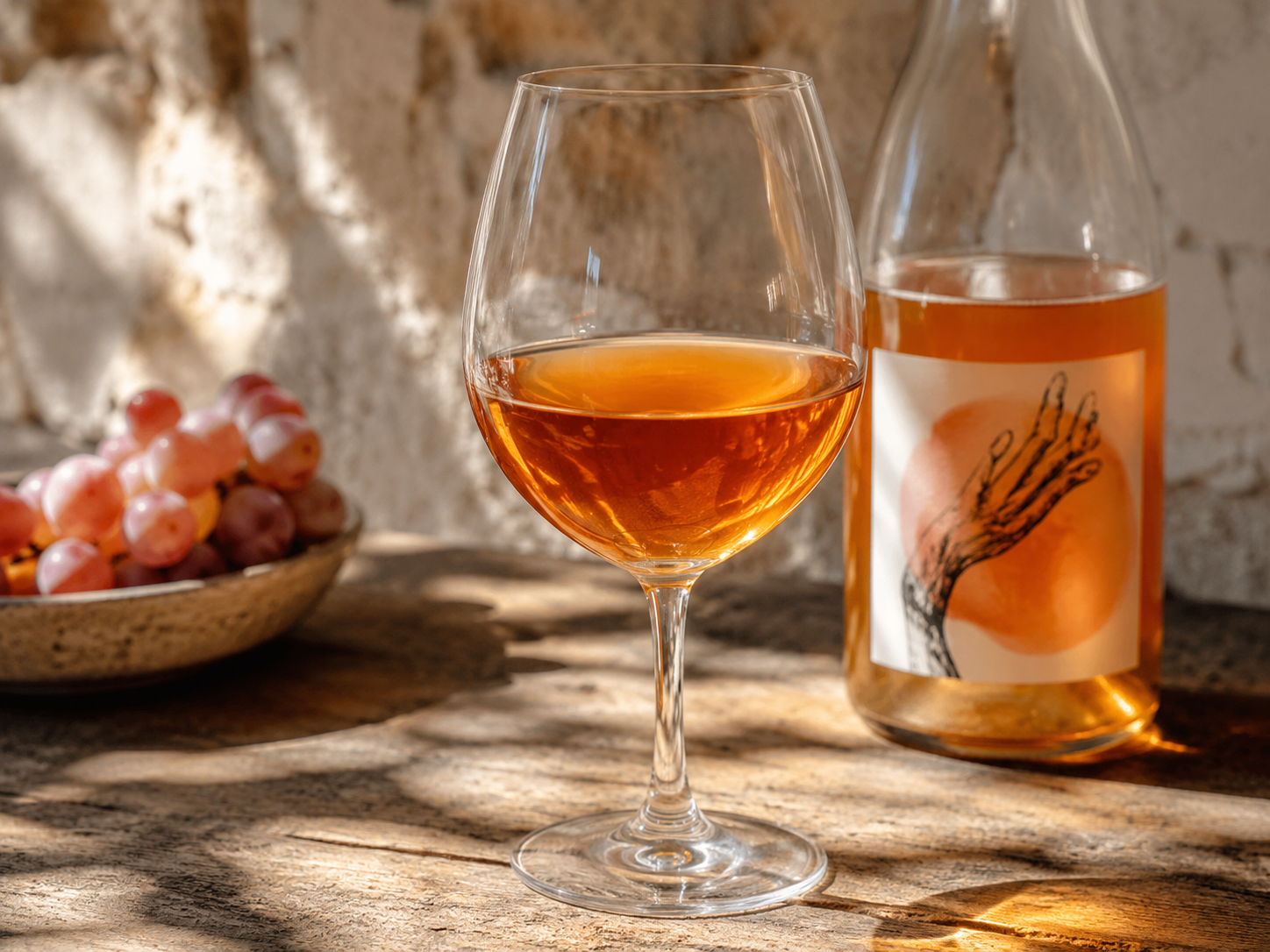
Orange wine and other alternative Portuguese wine styles
Orange wine seems to be everywhere these days, all Lisbon wine-bars are full of it. But while it may feel like a new trend, many of the techniques behind these wines have a much longer history.
Portugal has a strong tradition of making wines outside what we now think of as conventional white and red winemaking. Some of these methods nearly disappeared, while others continued quietly for generations. Today, they are being rediscovered by a new generation of winemakers.
During this tasting, we’ll explore Portuguese wines made using traditional and alternative techniques, from white wines made with curtimenta (skin contact) to palhete wines and wines fermented in talha.
So what exactly are we tasting?
Orange or skin-contact wines are made from white grapes that remain in contact with their skins during fermentation. In Portugal, this technique is traditionally known as curtimenta. The skin contact can give the wines more colour, texture and tannin, as well as a very different aromatic profile from a conventional white wine.
While “orange wine” may sound like a modern trend, curtimenta has a long history in Portuguese winemaking. Today, winemakers across the country are rediscovering the technique and experimenting with different grape varieties, fermentation vessels and lengths of skin contact.
Palhete is a traditional Portuguese style in which red and white grapes are fermented together. The result often sits somewhere between a light red and a dark rosé, with freshness, fragrance and plenty of character.
We’ll also look at talha wines, fermented in large clay vessels. This ancient method has survived particularly strongly in the Alentejo and is now attracting renewed attention from both winemakers and wine lovers.
Old techniques, new attention
What makes these wines particularly interesting is that there is no single “alternative wine” style.
Some are fresh, aromatic and easy to drink. Others are more structured, savoury or textural. Some show very clearly the influence of long skin contact or clay fermentation, while others are surprisingly subtle.
During the tasting, we’ll compare different examples, look at how they are made and discuss what these techniques actually change in the glass. Most importantly, we’ll taste them side by side and find out what all the fuss is about.
What’s included:
Guided tasting of Portuguese wines made using different traditional and alternative techniques
Selection of vegetarian bites
Tasting handout with information about the wines and winemaking methods
The tasting is informal and educational, with plenty of opportunity to compare the wines, ask questions and discover styles you may not normally come across. Max 15 participants. Price € 40 pp.
Book your place and explore a very different side of Portuguese wine.